
Arrow Trace: Escape Puzzle
Game Changer SoftwareCasual
4.8182.00 Reviews
- Version
- 1.2.1
- Installs
- 500.00K
- Age Rating
- Everyone
Screenshots

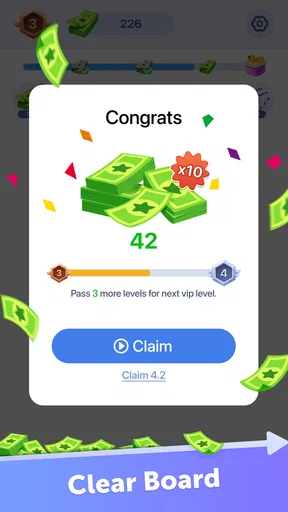
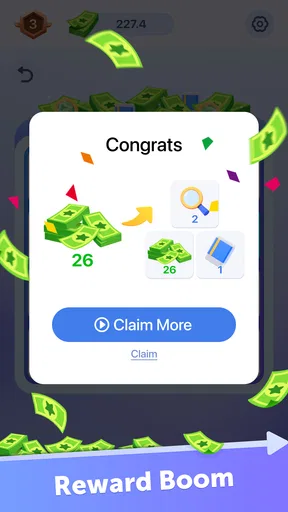

Our Review of Arrow Trace: Escape Puzzle
 Analysis by Appyee
Arrow Trace: Escape Puzzle is a casual game built around one clear idea: releasing arrows in the right way. That sounds simple, but the appeal comes from turning a single action into a small exercise in observation, timing, and order. I found it easiest to enjoy when I treated each puzzle as a visual problem rather than something to rush through. The game’s store summary, “Release all the arrows!”, captures the central goal, while the short description, “Arrow Trace,” hints at the tracing-focused identity behind it.
What makes this worth discussing is not a huge collection of systems or a complicated story. It is the way a narrow capability can shape the entire experience. Instead of asking me to manage several unrelated mechanics, the game keeps bringing my attention back to the arrows and the paths around them. That focus gives it an approachable feel, although it also means the experience will not suit someone looking for deep progression, character development, or a busy competitive game.
Game Changer Software presents it as a free casual title for everyone, and I think that positioning is accurate. It is the kind of game I can open for a short mental break, play with one hand, and put down without feeling that I have abandoned a long session. At the same time, the apparently simple premise rewards more care than the first glance suggests. The important skill is not tapping quickly; it is reading the board before committing to a move.
Why releasing arrows is the whole experience
I find the appeal starts with how quickly the goal becomes readable: the arrows are right there, and the challenge is deciding what to release first. That makes it easy to begin, but it also rewards a pause before the first move; scanning for a clear route can prevent a promising board from turning into guesswork. From there, I look at what the game offers as a sense of progress.
A single capability with real consequences
The defining capability is the ability to release arrows by tracing or interacting with them in the intended sequence. I do not see that as a minor visual gimmick. It determines how I look at every puzzle. An arrow is not merely an object to clear; it is part of a route, and its position can affect what becomes possible next. That makes the board feel more like a compact arrangement to decode than a collection of items to remove at random.
This focus is especially effective for players who like tidy, readable puzzles. There is a satisfying moment when a crowded arrangement becomes understandable: one arrow appears ready, another is blocked by the first, and a third requires me to notice the direction of the available space. The pleasure comes from finding the sequence that makes the whole layout open up. It is a modest form of problem solving, but it gives each move a purpose.
I also appreciate that the central action is easy to explain to another person. If I handed the phone to a friend, I would not need to teach a large ruleset first. I could simply point out the arrows and explain that the goal is to release them. That low entry barrier is a major strength for a game aimed at the casual audience, particularly for players who prefer learning through interaction rather than reading instructions.
Why the focus feels different from ordinary casual games
Many casual games rely on matching colors, stacking objects, avoiding hazards, or completing a timed pattern. Arrow Trace: Escape Puzzle sits closer to the visual-puzzle side of that group. Its main attraction is spatial reasoning: I need to understand how one release changes the available space for the next. Compared with a match-style game, the result feels less dependent on creating a lucky combination. Compared with a fast arcade game, it gives me more room to pause and inspect.
That difference matters in everyday use. When I am tired, I can still understand what the game is asking me to do. When I want something more thoughtful, I can slow down and look for a clean solution instead of tapping through familiar patterns. The trade-off is that players who enjoy constant motion or immediate rewards may find the deliberate pace too restrained.
The game’s strongest identity therefore comes from restraint. It does not need a large number of mechanics to be recognizable. The arrows, their arrangement, and the act of releasing them provide the structure. In my experience, that makes the game easier to return to than a casual title overloaded with menus and side activities, but it also places more pressure on the puzzle layouts themselves. If a particular arrangement does not feel readable or satisfying, there is less else around it to compensate.
How I approach a board before touching it
My most useful habit is to pause for a moment at the start of each puzzle. I scan for arrows with an unobstructed route and mentally separate them from arrows that seem dependent on another move. This small delay prevents the most common mistake: releasing the first obvious arrow without checking whether it is actually part of a better sequence.
I then look for relationships rather than isolated pieces. If two arrows appear to compete for the same space, I ask which one can move cleanly and which one may be waiting for the other. This approach is more reliable than following the order in which my eyes notice objects. It also makes the game feel more strategic without requiring complicated rules.
Another practical tip is to avoid treating every move as permanent in my mind until I have considered the next one. Even when a move looks safe, I try to predict what the board will look like immediately afterward. That habit is useful for younger players because it turns the game into a gentle lesson in planning, and it is useful for adults because it keeps a supposedly relaxing session from becoming a string of impulsive taps.
The best everyday scenario
The strongest use case for me is a short break when I want something more engaging than scrolling but less demanding than a full game session. I can play while waiting for an appointment, during a quiet commute, or between household tasks. The arrow-focused design lets me understand the objective quickly, so I do not need to remember a complicated storyline or rebuild a large strategy every time I return.
It also works well as a shared, informal puzzle. I can show a board to someone nearby and ask which arrow they would release first. Because the central rule is visible, the conversation begins immediately. That makes it more suitable for casual cooperation or friendly debate than games whose enjoyment depends on private progress, hidden information, or long-term investment.
For families, the Everyone content rating makes the game easier to consider as a general-audience option. I would still recommend that younger players be encouraged to explain why they chose a move rather than simply tapping until something works. The game has more value when it develops observation and sequencing, not just trial and error.
One useful routine is to use it as a reset between demanding tasks. I would play a small number of puzzles, then stop rather than forcing a long session. The focused interaction can clear my attention, but the same narrowness can become repetitive if I keep playing after the puzzle-solving satisfaction has faded. It is better as a compact mental break than as the only game on my device.
Where the trade-offs become noticeable
The greatest limitation is also the game’s defining strength: everything depends on the quality and variety of the arrow puzzles. Since the experience centers on releasing arrows, players who need several forms of progression may eventually want more than this format provides. I would not choose it as a replacement for a story-driven puzzle adventure, a competitive title, or a strategy game with evolving systems.
There is also a difference between accessible simplicity and lasting depth. The basic interaction is welcoming, but a player who quickly masters the visual logic may begin to look for stronger surprises. That does not make the game unsuccessful; it simply defines its audience. It is designed for focused casual play, not for someone demanding a large ecosystem of mechanics.
I also think the game rewards patience more than speed. If I approach it expecting rapid-fire reactions, I may interpret the pauses between decisions as a weakness. If I enjoy examining a layout and choosing an order, those same pauses become the point. The better alternative for a reflex-oriented player would be an arcade game with immediate feedback and constant movement. Arrow Trace: Escape Puzzle is a better fit when the satisfaction comes from understanding rather than reacting.
Because it is free, the barrier to trying it is low, but “free” does not automatically mean it will suit every player. The real question is whether the arrow-release mechanic remains interesting for the length of a session. I recommend trying it with a short, open-minded mindset instead of expecting a broad game package. Its value is concentrated in the central puzzle interaction.
Small techniques that improve the experience
- Read the full arrangement first: I look for the arrows that can move without depending on another piece, then compare them with the ones that appear trapped or crowded.
- Think one move ahead: Before releasing an arrow, I picture the new open space and check whether it creates a clearer route or leaves another piece awkwardly blocked.
- Use discussion as a tool: When playing with someone else, I ask them to justify the first move. Explaining the sequence often reveals an overlooked relationship on the board.
- Stop at the right time: Short sessions preserve the satisfaction of solving layouts and reduce the chance that the repeated core action starts to feel monotonous.
These habits are not hidden buttons or advanced systems; they are ways of getting more from the capability the game actually offers. That distinction is important. I would not claim that the title becomes a complex strategy game through technique alone. Instead, careful play helps its simple premise feel more deliberate and rewarding.
Who will gain the most from it
I think the best audience is anyone who enjoys visual puzzles, orderly problem solving, and games that can be understood quickly. It is a particularly good choice for a player who wants a calm alternative to match games but does not want the commitment of a large puzzle campaign. It may also suit parents looking for a general-audience game whose central challenge can be discussed rather than hidden behind complicated controls.
It is less suitable for players who need a strong narrative, competitive rankings, elaborate customization, or a constantly changing set of mechanics. I would also steer away from it if my main goal were fast reflex training. The game asks me to observe and sequence, so a different casual title would be a better choice when I want speed, spectacle, or immediate action.
The broad reception suggests that the concept has connected with many players: it holds an average rating of 4.8 from around two thousand ratings, and it has passed over 500 thousand installs. Those figures make it easier for me to recommend as a game worth trying, although they do not change the basic judgment that its appeal depends on enjoying the arrow-centered format.
Practical details before installing
Arrow Trace: Escape Puzzle is free, developed by Game Changer Software, and available for devices running Android 7.0 or later. Its content rating is Everyone, so it is positioned as a broadly accessible casual game rather than an age-restricted experience. The current version is 1.2.1, which is the version I would look for when checking that my installation is up to date.
The game was released on Jul 24, 2026, and its store presence includes around 182 written reviews alongside the rating activity. I mention that only to give the title some context: it is not an obscure concept with no visible audience, but the most important decision remains personal. A high rating cannot tell me whether I enjoy tracing and sequencing arrows; trying the core interaction is still the best test.
My final recommendation
After spending time with it, I see Arrow Trace: Escape Puzzle as a focused casual puzzle rather than a broad all-purpose game. Its one verified capability—releasing arrows through a trace-oriented interaction—has a real effect on play: it makes me inspect the board, plan an order, and value a clean solution over frantic tapping. That focus is why I would recommend it to friends who like compact visual challenges.
I would present it honestly, though. It is not the right pick for someone seeking a story, deep progression, or high-speed action, and its repeated central format may not hold every player indefinitely. For short breaks, family-friendly puzzle sessions, and moments when I want to exercise attention without learning a complicated ruleset, it is a convincing choice. If you enjoy finding the right sequence more than chasing constant excitement, this is a free game I would gladly keep available for quick, thoughtful sessions.
Verdict
Strengths of Arrow Trace: Escape Puzzle
- Simple swipe controls are easy to learn within a few seconds.
- Short levels make it suitable for quick gaming sessions.
- Minimalist visuals keep the screen clear and distraction-free.
- Increasing difficulty provides a satisfying sense of progression.
- Works well for players who enjoy logic challenges without a story.
Limitations of Arrow Trace: Escape Puzzle
- Some puzzles may feel repetitive after extended play.
- Later levels can be frustrating without a clear hint option.
- The minimalist presentation offers little variety between stages.
- Players seeking action or narrative may find it too basic.
- Progress may feel slow if solutions require repeated trial and error.
Similar Picks in This Category
View All
My Talking Angela
Outfit7 Limited4.2

My Talking Tom
Outfit7 Limited4.3

Pou
Zakeh4.2

My Talking Tom 2: Pet Game
Outfit7 Limited4.3

Candy Crush Saga
King4.6

Bridge Race
Supersonic Studios LTD4.1
Frequently Asked Questions
What is Arrow Trace: Escape Puzzle, and how is it played?
Arrow Trace: Escape Puzzle is a logic game built around guiding a moving path through arrow-based layouts and escape-style challenges. You need to study the direction of each arrow, plan a safe route, and avoid blocking your own progress. The early stages are easy to understand, but later puzzles require careful sequencing, spatial awareness, and patience rather than quick reflexes.
Is Arrow Trace: Escape Puzzle suitable for beginners?
Yes. The game is approachable for beginners because its central mechanic is simple: follow or arrange arrow directions to reach the required exit or complete the trace. Difficulty increases gradually, giving you time to understand the rules before introducing tighter routes and more complicated patterns. Players who enjoy short logic challenges should be able to start comfortably without previous puzzle-game experience.
Does Arrow Trace: Escape Puzzle work offline?
The core puzzle experience appears designed for convenient, pick-up-and-play sessions, which makes it suitable for playing when you do not have a stable internet connection. However, features such as advertisements, analytics, updates, cloud-related services, or optional online content may require connectivity. If offline access is important to you, it is worth testing the game in airplane mode after installation.
Are there hints, extra lives, or in-app purchases in Arrow Trace: Escape Puzzle?
Puzzle games of this type commonly include assistance features such as hints, resets, or other ways to recover when a level becomes difficult. Depending on the current version, some help may be limited by a reward system, advertisements, or optional purchases. Before downloading, check the store listing for the latest information about ads, in-app purchases, and whether hints are available without spending money.
Is Arrow Trace: Escape Puzzle free to download, and is it appropriate for children?
Arrow Trace: Escape Puzzle can generally be downloaded at no initial cost, although the exact monetization model may include advertising or optional in-app purchases. Its non-violent, problem-solving format makes it broadly suitable for children and families, but parents should still review the age rating, advertising content, privacy details, and purchase settings. Younger players may also need help with the more challenging levels.
Play our best games!


